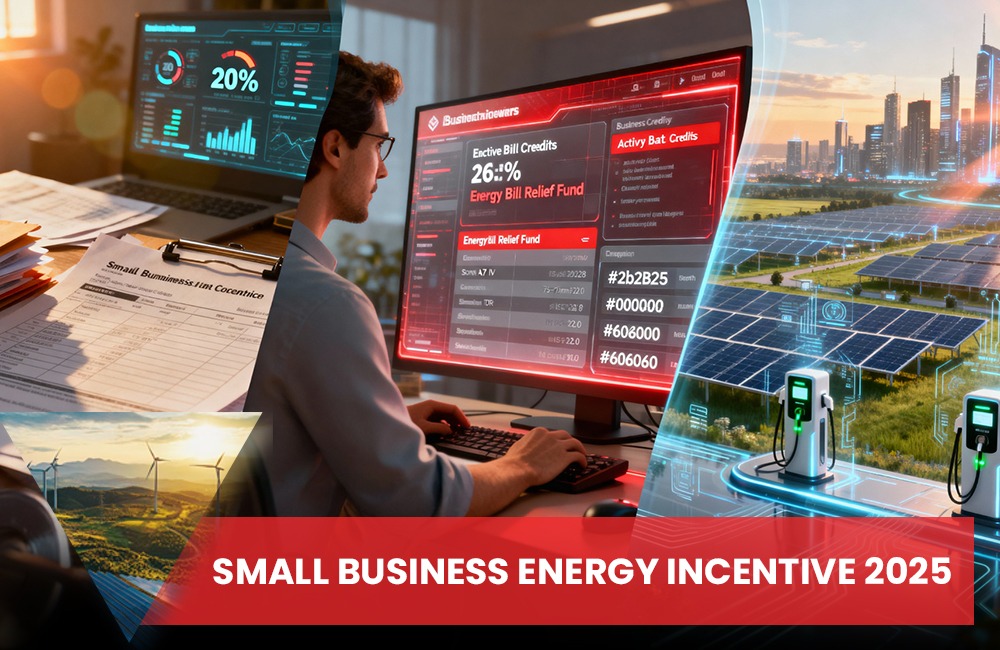





Stop guessing and start saving: As an Australian small business, rising energy costs are a major pain point. The 20% Bonus Tax Deduction (the Small Business Energy Incentive or SBEI) had a deadline but government support hasn’t disappeared. There are still active rebates and new incentives on the horizon you need to know about.
This guide explains the difference between the Bonus Deduction (Closed) and the Energy Bill Relief (Active) and looks ahead to the next wave of government support for energy efficiency so your business can get every saving.
Quick Summary: What’s Active Now?
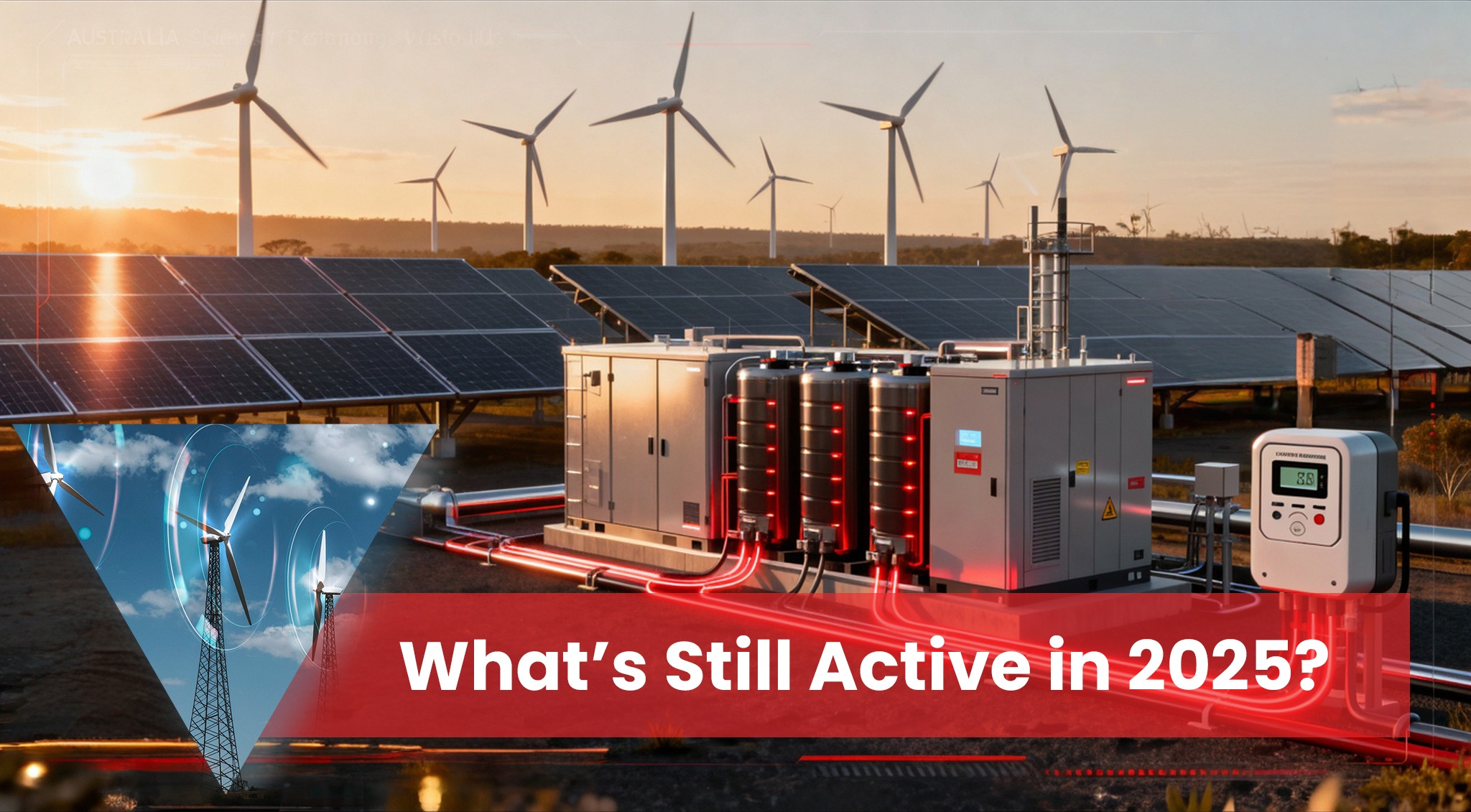
The core Small Business Energy Incentive (SBEI)—the 20% bonus tax deduction on assets—closed on 30 June 2024. But Australian SMEs with high electricity usage are eligible for direct rebates on their power bills under the Energy Bill Relief Fund (EBRF).
| Energy Incentive | Type | Status (Nov 2025) | Eligibility |
| 20% Bonus Deduction (SBEI) | Tax Deduction (Asset Purchase) | CLOSED (Expired 30 June 2024) | Businesses with turnover $<\$50$ million (for expenditure incurred in FY24). |
| Energy Bill Relief Fund (EBRF) | Direct Rebate/Credit | ACTIVE (Extended until Dec 2025) | SMEs meeting state/territory small customer electricity consumption thresholds. |
| Active State Programs | Grants/Upgrades | ACTIVE & ONGOING | Varies by state (e.g., Victoria, NSW, SA). |
The Closed Incentive: A Quick Look Back at the 20% Bonus Deduction
For compliance and record keeping – in other words, to make sure we all have a clear picture – it’s really important to understand the original rules of the Small Business Energy Incentive (SBEI) if you did make any purchases back in the 2023-2024 financial year.
The Eligibility Window (How things used to be):
- The Bonus: You could claim an extra 20% tax deduction on the cost of eligible assets and improvements – a nice little bonus.
- The Cap: The maximum bonus deduction you could get was $20,000 – which means the maximum amount of eligible spending was $100,000.
- The Turnover: You had to be a business with an aggregated annual turnover of less than $50 million.
- The Deadline: To qualify for the incentive, you had to have installed or had the assets in use between 1 July 2023 and 30 June 2024 – and be able to show the ATO a record of when they were ready to go.
What Kind of Assets Were Eligible?
The rules were quite specific, and it was really about investing in things that would help you use less energy or switch from fossil fuels to electricity. For example:
- Upgrading to more efficient ones of refrigeration systems or display cabinets.
- Installing newer reverse cycle air conditioners to replace those old gas heaters.
- Getting a heat pump hot water system installed.
- Installing time-shifting or energy storage devices.
- The one key exclusion: Solar panels and motor vehicles were not eligible for this particular bonus deduction.
Present Relief: Active Rebates for Energy Bills (2025/2026)
While the bonus deduction may have finished, the Commonwealth Government and States are actually providing direct financial relief through the Energy Bill Relief Fund (EBRF) to ease rising energy bills.
The Energy Bill Relief Fund (EBRF) Extension Details:
- The Amount: You can expect to get an extra up to $150 in direct bill credits on top of the $325 already provided in the 2024-25 financial year. This extra help is available in the first half of the 2025-2026 financial year (ending December 2025).
- How it works: The credits are applied automatically by your electricity retailer – so no application is required – and you’ll see the reduction on your bill.
- Eligibility: To qualify, you’ll need to meet your state or territory’s definition of an electricity ‘small customer’ – which is usually based on annual electricity consumption. Don’t bother if you operate out of home on a residential tariff – you won’t be eligible
| State/Territory | Annual Consumption Threshold |
| NSW, QLD, ACT | Below 100 Megawatt-hours (MWh) |
| VIC | Below 40 MWh |
| WA | Below 50 MWh |
| SA, NT | Below 160 MWh |
Why Do These Rebates Matter?
One big difference between a tax deduction and the EBRF is that the EBRF actually gives you a direct reduction to your cash outflow, which can make a real difference right now to your bottom line.
Future Trends: What’s Next for Energy Incentives?
The trend these days is towards energy efficiency and electrification – this is something that is strongly supported by both government and industry in Australia. While the SBEI has run its course, there is a lot of momentum for new and re-introduced measures to help get us closer to net-zero targets.
Trend 1: Focus on Grants and State Programs
In the near future, the focus is shifting from broad, one-off tax deductions to more targeted Grants and State-Based Rebates, which can offer upfront savings:
- Victoria: You can get significant discounts on upgrades like commercial LED lighting and heat pump systems through the Victorian Energy Upgrades (VEU) program.
- NSW: The Energy Savings Scheme (ESS) works in a similar way, providing financial incentives for verified energy-saving activities.
- National Grants: Programs like the Energy Efficiency Grants for SMEs – which handed out up to $25,000 for equipment upgrades – show that the government is keen to provide direct federal funding for initiatives that help save energy, and it’s likely we’ll see similar programs announced in the not too distant future.
Trend 2: Potential Reintroduction of a Bonus Deduction
We’re seeing some industry and political chatter about the possibility of re-introducing an incentive to help businesses save on their energy bills. This would likely take the form of a new or modified energy incentive and would reflect the government’s ongoing commitment to helping businesses out with their costs. This could involve :
- A higher bonus or an extended timeline – some people are talking about an extension to 2028.
- A focus on upgrading to equipment that really delivers on emissions reduction and electrification – in line with Australia’s net-zero targets.
Trend 3: Tax Incentives Tied to Net-Zero Transition
As things stand we can expect tax relief to be tied to clear efforts to reduce emissions – so you should be looking for programs that specifically target switching from high-carbon intensity equipment to modern, efficient electric alternatives and renewable energy storage. This all ties in nicely with the “Future Made in Australia” agenda.
Conclusion: Your Next Steps to Energy Savings
Don’t wait for the next federal tax incentive to come along – your business can take action today to start saving.
- Check Your Bill for the EBRF: Just give your retailer a check to see if they’ve applied for the extra $150 credit that’s on offer for the July – December 2025 period. And if you’ve got multiple sites you’ll need to check your state’s eligibility criteria for multi-site customers.
- Get an Energy Audit: Work out a plan for replacing any major energy consumers – like old air conditioning or refrigeration units – and you’ll be ready to go the moment a new incentive comes along.
- Keep an eye on State Programs: If you want to get your hands on some upfront savings then the fastest option is usually a State-Based Rebate. Regularly check your state’s government business portal for information on grants for things like LED lights, solar batteries, or equipment upgrades.
Small Business Tax Incentives and Compliance FAQs (2025)
What is the Energy Efficiency Grant for Small Businesses?
The federal Small Business Energy Incentive (SBEI) was a 20% bonus tax deduction (not a grant) on eligible energy-saving assets – but now it’s closed.
- When did it finish: The deadline was for expenditure incurred and assets first used or installed ready for use between 1 July 2023 and 30 June 2024.
- The cap was $20,000 (on $100,000 of expenditure).
- The takeaway is even though the deduction is no longer available you should focus on the Energy Bill Relief Fund (EBRF), which provides direct bill credits (up to $150 through December 2025) and state-based programs for solar, lighting and equipment grants that’ll give you some upfront savings.
What is the $20,000 instant asset write-off for small businesses?
The $20,000 Instant Asset Write-Off, a key tax break for eligible small businesses, lets them claim an immediate tax write-down for any asset they buy that costs less than 20 grand.
- Eligibility (2024-2025): For your business to qualify, you’ve got to be a small business with an annual turnover of well under 10 million and be making use of the simplified depreciation rules.
- The Key Thing: The asset has got to be put to work for a taxable purpose at some point between July 1 2024 and June 30 2025. Just buying the thing isn’t enough.
- How It Works: The limit is per asset, so you can write off loads of different eligible assets, as long as each one on its own is below the 20,000 dollar mark.
What is the $1,000 small business tax offset?
The Small Business Income Tax Offset is also known as the unincorporated small business tax discount – it gives a tax offset of up to $1,000 a year, a bit of good news for small business owners.
- Who Benefits: Sole traders, partners in a partnership, and trust beneficiaries who run a small business.
- The Catch: The business has to have an annual turnover of less than 5 million (which has been the case since 2016-17).
- The Deal: The ATO calculates the offset automatically, based on your individual tax return. The good news is the current rate is 16% of income tax payable on your net small business income, up to the $1,000 limit.
What is the 80% rule for sole traders?
The 80% rule is basically the key test for businesses that are classified as Personal Services Income.
- The Rule: If 80% or more of your income comes from just one client or their associated companies, then you automatically fail the 80% rule and won’t be able to self-assess as a Personal Services Business.
- What Happens If You Fail: If you fail this rule, and a couple of other tests, it can limit how many tax deductions you can claim to the level you’d get if you were an employee – which can easily result in big tax bills. The 80% rule helps stop people setting up a business just for the tax benefits.
What is the most overlooked tax break?
The most commonly overlooked tax benefit is the one for expenses your business incurred before it actually started trading.
- The Break: You should be able to claim tax deductions for most expenses linked to setting up your business, such as feasibility studies or website development, that you incurred a year before your business started trading.
- The Condition: The key thing is that these costs have got to be genuine expenses and can’t be capital in nature – a lot of sole traders miss these costs in their first year and as a result miss out on valuable tax deductions.