







Households are still feeling the squeeze, even as the headline inflation rate cools. The ABS monthly CPI indicator rose 3.0% over the year to August 2025, with housing and food the main contributors—so every dollar saved or earned counts.
At the same time, wages growth has slowed: the Wage Price Index rose 3.4% over the year to June 2025, so real gains are hard to come by without smarter earning strategies.
The RBA has held the cash rate at 3.60% into September/October 2025 as it watches services inflation and jobs—keeping borrowing costs high for many families.
Why side hustles, digital work and flexible income are trending in 2025?
Australians are looking for easy ways to make money that fit around study, caregiving and shift work. New research shows nearly 70% of employed Aussies are doing or considering a side hustle in 2025, led by Gen Z into e-commerce and content creation.
Meanwhile the RBA says inflation progress is uneven, so a policy pause—another nudge for households to diversify income rather than rely on wage growth.
Overview of how Aussies can earn smarter with technology, lifestyle choices and creative skills.
- Tech-enabled gigs (Airtasker tasks, app/website testing, micro-freelancing) you can do from home with minimal setup.
- Content and commerce (blogging, affiliate marketing, dropshipping, selling digital downloads) that scale beyond hours-for-dollars.
- Local services (tutoring, pet sitting, car washing/detailing) that turn idle time into cash, supported by platforms like Gumtree and Facebook Marketplace.
Looking ahead AI tools will speed up content creation, admin and analytics, so Aussies can stack multiple micro-income streams; and as monthly CPI becomes the primary inflation gauge from Oct–Nov 2025 expect faster read-through from price trends to household strategy—making agile, data-driven earning even more valuable.
Best Easy Ways to Make Money for Aussies in 2025 and Beyond
1. Online Surveys & Market Research
Here you will join survey panels or paid market-research programs (online or in-person) and complete tasks such as online questionnaires, product reviews or focus groups.
How many Aussies use it: Australia has around 986,400 people (6.6% of employed Australians) working a second job or side hustle. While there’s no exact figure for surveys, these tasks are part of the “side hustle” pool.
Earning potential: Many survey tasks pay small amounts—e.g. one Australian made $1,418 over 7 months from digital-product sales and surveys. Research shows most side hustles in Australia earn less than $500/month.
Pros: Very low barrier to entry; can be done in spare time; minimal skills required.
Cons: Earnings are low; tasks can be repetitive; payout may require reaching thresholds; time-spent may not yield high reward.
2. Become a Virtual Assistant (VA)

If you’re a professional Virtual Assistant (VA), you can offer remote support to businesses – basically, taking care of the day to day tasks like scheduling, email management, bookkeeping and a bunch of other online stuff..
How many Aussies are into it: “Sofer side hustles” are huge in Australia – so much so that virtual assistants are one of the most searched side hustles in the country.
Pay potential: The average hourly rate for virtual assistants in Australia is around AUD $44 – if you work 10 hours/week that’s about $400/week – or $1,600/month, before tax of course.
Pros: Work from home, demand is growing, and you get to build some valuable business skills along the way.
Cons: You’ll need a decent internet connection, be pretty well organised, and be prepared to deal with a bit of competition – also you’re the one in charge of sorting out your own tax and records.
3. Start a Blog

So you’ve got a passion or expertise in something – now start a blog about it, attract some traffic and then figure out ways to make some money out of it – like advertising, affiliate links or even selling some digital products.
How many Aussies are excited about it: To be honest it’s a bit tricky to get an exact figure on how many Aussies are blogging, but they really do love the idea of making some extra cash on the side – take the 179,000 Aussies who just looked up “how to make money online” to see how keen they are.
Pay potential: It can range from a bit to a lot – hundreds to thousands of dollars a month depending on what you’re writing about and how many people are reading it. And the sad truth is a fair few people only make about $500 a month.
Pros: Your blog can earn you a pretty penny after a while – especially if you get it to a point where it’s making money even when you’re not working on it. Plus you get to build up a bit of authority and build a personal brand.
Cons: First off, it takes a fair bit of time to build up an audience, and it requires a level of discipline to keep churning out new content. And then there’s the risk that your income will vary wildly from one month to the next.
4. Affiliate Marketing

With affiliate marketing, you’re basically a middleman – you promote some product or service ( through a blog, social media or email marketing) and then get a commission for every sale that comes from your unique link.
How many Aussies are into it: This side hustle falls under the big digital job sector in Australia – where lots of Aussies are already working – so it’s probably no surprise to see that close to 70% of Aussies are at least considering starting some form of side hustle.
Pay potential: Some people might make a tiny bit of cash, but some make thousands – it really depends on what you’re promoting, who you’re promoting it to and how good you are at marketing.
Pros: Starting out with affiliate marketing is pretty cheap – and you can scale up as much as you like – so if you really take off you can earn a decent income.
Cons: It’s a competitive space and it’s not guaranteed to make you any money – even if you do all the right things. The income can also be quite unpredictable – and you might find yourself reliant on third-party platforms to keep earning.
5. Sell Digital Products
Create a digital product – like an ebook, or a template or even some software – and sell it to people who are looking for it.
How many Aussies are earning from it: We actually get to see an example of this in action – one Aussie managed to make about $1,400 in just 7 months by making and flogging some templates to people who wanted them.
Pay potential: If you sell something for $30 and you manage to sell 100 of them a month, that’s about $3,000 a month – though let’s be clear, not everyone is going to be that successful.
Pros: Selling digital products can give you a pretty high margin – and once you’ve made it, you can just sell it again and again. Plus it’s pretty scalable.
Cons: You’ve got to put in some real effort up front to create the product. Then you’ve got to market it to people who are interested – and do all that while fighting off a bunch of competition.
6. Social Media Management

If you’re good at social media management– create a presence for businesses or brands online and get paid for it.
How many Aussies are doing it: It’s part of that big “sofa side hustle” market in Australia – with average hourly rates of AUD $44.
Pay potential: If you’re charging $40 an hour and you work 8 hours a week, that’s about $320 a week – and if you keep scaling up, you can charge more.
Pros: Small businesses and brands are always looking to get more out of social media – so there’s a high demand for this kind of work. Plus you can often systemise the work, so its pretty repetitive and easy to do.
Cons: You need to be creative and be able to keep coming up with new content – and on top of that, algorithms can change overnight, making your job a lot harder. Oh, and you’ve got to deliver results to your clients.
7. Become an Influencer

As an influencer, you’ll build a dedicated social-media following in a niche, typically on Instagram, TikTok or YouTube, and then monetize that by accepting brand deals, sponsorships or affiliate links.
How many Aussies are into it: The numbers tell us that side-hustle interest is really high in Australia – 81% of Australians under 25 are either side-hustling or want to get into it.
Earning potential: If you’re a micro-influencer (think 5,000 to 20,000 followers) you could earn anywhere from hundreds to a few thousand dollars per brand post; while top influencers are basically rolling in it.
Pros: It can pay really well; you get creative freedom; and of course, you build your own personal brand, which is pretty cool.
Cons: To be successful, you’ll probably need a pretty big or at least pretty engaged audience; your income is unlikely to be consistent; and creating all that content can be time-consuming – and authenticity is also key.
8. Dropshipping

Dropshipping is a business model that lets you sell products online without actually holding any stock – when someone buys something from you, you just order it from a supplier and let them ship it directly to the customer.
How many Aussies are using it: Unfortunately we can’t get a exact figure but part of the data points to the fact that Australians are joining the remote and online hustles – and that’s a growing trend.
Earning potential: It’s worth noting that the profit margins can be quite variable, often ranging from 10-30% after you’ve covered all your costs. If, for example, you’ve got a store that’s raking in $5,000 a month and has a 20% margin, you might be able to make around $1,000 a month in gross profit.
Pros: There’s very little inventory risk; you can do it all from anywhere; and of course, the model is super scalable.
Cons: There’s a lot of competition out there; you’ll need to put in the hard yards to get people to your store; shipping and customer service issues can be a real headache – and the profit margins, as I mentioned, aren’t always huge.
9. Test Mobile Apps & Websites
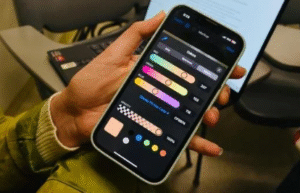
If you’re a bit of a tech head, then you might enjoy testing out mobile apps and websites – all you need to do is sign up for some testing platforms and get paid to try out apps and websites, give them your honest feedback on the UX, the bugs, how user-friendly they are.
How many Aussies are cashing in on it: I think you’ll be happy to hear that testing mobile apps is on the list of “easy side hustles that pay up to $50/hour” – so it looks like Australians are pretty keen on this one.
Earning potential: Now some of the individual tasks will pay out anywhere from $6 to $30 – depending on just how complex they are. If, for example, you knock off 10 tasks for $15 each, that’s around $150.
Pros: The tasks are nice and short; you can do them on your own schedule so it’s really flexible; and low skills are required.
Cons: The thing is, the availability of tasks can be a bit hit and miss; the pay per task isn’t always going to be sky-high; and sometimes you’ll need a specific device or setup to do the job.
10. Launch a Podcast

Start a podcast by getting some audio or video episodes recorded on a topic you’re passionate about, distributing them out to the public on all the major platforms, building up your audience and then monetize through ads, sponsorships and membership programs.
How many Aussies are tuning in: We don’t have Aussie-specific data but what we do know is that podcast growth globally and in Australia is really strong – as part of the trend of people wanting to create their own content and become their own mini-business.
Earning potential: New podcasts might not be bringing in much money – at least not at first – but if you build up a successful audience of tens of thousands of listeners a week, you could be raking in thousands of dollars a month via sponsorships.
Pros: You get to do something creative; you can build up your authority on a topic you care about; and the other income streams like events and books can start to roll in.
Cons: The thing is, you need to be producing that content consistently; building up your audience is going to take time; and you might need to invest in the right equipment and editing tools to make it all happen.
11. Freelancing (Multi-Skills: Graphic Design, Coding, Editing, Admin)

Offering your skills as a freelancer – whether that’s design, programming, video editing or data entry and admin tasks – is a super popular side-hustle option.
How many Aussies are freelancing: According to the data, Australia is ranked 8th in the global online freelance economy – which is a pretty impressive stat.
Earning potential: Typically, the going rate will be around $30-$70 an hour, depending on the skill. If you’re freelancing for 10 hours a week at $50 an hour, you could be making around $500 a week, or $2,000 a month. And for some people, full-time freelancing can be a real money-maker.
Pros: The earning potential is high; you get to build up your own portfolio of work; you can improve your skills on the job; and it’s often remote work.
Cons: The thing is, you need to find new clients all the time; your income might not always be super consistent; and you’ll need to sort out all the business-y side of things like taxes and invoicing.
12. Freelance Writing

Be a freelance writer by writing blogs, web content, articles, copywriting for brands, agencies.
How many Aussies use it: Part of the broader freelance/content creation trend and side-hustle dataset.
Earning potential: Typical freelance writers in Australia might charge $0.10-$0.50 per word or $30-$80/hour depending on experience. If you write 5 articles at $300 each, that’s $1,500.
Pros: Low setup cost; can work remotely; wide demand.
Cons: Competitive; may need to pitch and market yourself; income fluctuates; isolation.
13. Tutoring (Online or In-person)

Teach students (school, university) or skills (music, languages, coding) either face-to-face or online.
How many Aussies use it: Finder data shows 15% of side-hustlers in Australia are tutors.
Earning potential: Tutoring rates in Australia vary widely; example rates might be $30-$80/hour depending on subject and level. At $50/hour for 5 hours/week you earn ~$250/week (~$1,000/month).
Pros: Good hourly rate; flexible hours; fulfilling work; short time-to-start.
Cons: Requires subject expertise; may need certification; demand may vary (school holidays slower).
14. Babysitting / Nannying

Care for children in a home or after-school setting, often evening/weekend gigs.
How many Aussies use it: Among the top-earning traditional side-hustles: Nannying ranks with ~$37.25/hour average.
Earning potential: At $37/hour for 4 hours/week you’d earn ~$148/week (~$600/month) – but during full evenings/weekends this can be higher.
Pros: Good hourly rate; fills weekend/evening gaps; in-demand among dual-income families.
Cons: Responsibility; irregular hours; may require certification (first aid, background checks); reliant on trust/cancellations.
15. Pet Sitting & Dog Walking

Look after pets while owners are away, or walk dogs in neighbourhoods.
How many Aussies use it: Data shows pet and related services are strong in urban side-hustle lists; traditional side hustles in Australia with ~$43.25/hour average (for photographer example) including pet services.
Earning potential: If you charge $25 per walk (or $50 per visit) and do 10 walks/visits per week, you could make ~$250/week (~$1,000/month).
Pros: Flexible; enjoyable if you like animals; can build repeat clients.
Cons: Weather/season dependent; outbreaks, cancellations; requires trust and reliability.
16. Car Washing & Detailing

Visit clients’ homes or local sites to wash and detail vehicles.
How many Aussies use it: One of the top traditional side-hustles categories; average rates ~$33.27/hour for cleaners—but similar service-based gigs.
Earning potential: If you charge $40 per car and service 5 cars/week, that’s $200/week (~$800/month). With higher volume or bigger jobs, you can earn more.
Pros: Low startup cost (cleaning supplies); demand is steady; physical and varied work.
Cons: Weather/seasonal dependent; physically demanding; travel/time costs.
17. Rideshare Driving

Using your car for platforms like Uber, Ola or DiDi to ferry passengers around – often in quiet time off the main roads.
Just how many Aussies are giving it a go: Well, it’s not too surprising to find out that part of side-hustle strategies include delivery & ride gigs – with a whopping 6.7% of employed Aussies having taken on a second job in March 2024.
How much you can earn: For most people, the going rate is around $25-$40 an hour before you start factoring in the costs of your car; so if you drive 10 hours a week at $30 an hour, that’s $300 or $1200 a month – before you’ve even started paying for the car, fuel, insurance etc.
The good bits: Flexible hours, you get to use your existing car – and there’s a lot of demand in the cities.
And the downsides: The cost of running your car – fuel, maintenance, insurance – is a big one; and then there’s the wear & tear on your vehicle, regulatory hoops to jump through and the income can be pretty patchy.
18. Food Delivery Services

Delivering takeaways, and groceries, via the likes of Uber Eats, DoorDash or whatever else is popular in your area.
How many Aussies are jumping in: We know that delivery work is one of the most popular side hustles – 16% of people with a job-based side hustle are getting in on the action (according to finder.com.au).
The money: Let’s say you can knock over $20 an order, and you do 5 orders an hour for 3 hours a week, at that rate you’re looking at $300 or $1200 a month before all the costs that come with driving around.
The upsides: It’s easy to get started – you can do it in the evenings, on weekends and it doesn’t take much setting up – but: there are costs to consider, and you’re at the mercy of demand, which can be affected by the weather, time of day and all sorts of other factors.
19. Cashback When You Shop

Using services like ShopBack, Flybuys or Woolworths Rewards to pick up some cash or rewards when you go shopping.
Just how many Aussies are on the bandwagon: While there isn’t loads of data on the specific cashback crowd, it’s safe to say that Australians are keen on making extra cash – especially when it’s as low-effort as earning cashback on your regular shopping trips.
The money side: You might make a few bucks, or a few tens of dollars – it really depends on the platform and the deals on offer. But if you can snag 2% cashback on your $1,000 monthly shopping bill, that’s $20 a month – which is about $240 a year.
The good bits: Not much effort – you’re just earning rewards on things you’d be buying anyway; and it’s risk-free, which is a big plus.
And the downsides: The pay is pretty small, and often you need to be spending a fair bit to make it worth while; and you’re reliant on the platforms rules and what offers they’ve got available.
20. Sell Your Used Stuffs Online

Selling second-hand items, like unwanted gifts or old furniture, on places like Gumtree, Facebook Marketplace or eBay.
Just how many Aussies are getting in on it: Finder says that Aussies are keen to make extra cash by selling unwanted goods – 37% of millennials reported getting in on the action, according to one survey.
The money: On average, people making a living this way are looking at around $897 a month – but it’s not always that steady and many people make a lot less.
The good bits: You get to declutter your pad, you’re not out any cash – and it’s flexible.
And the downsides: Income is a bit all over the place; it takes time to list and get all that stuff sorted; you have to keep an eye on the prices of similar items, so you don’t end up selling for peanuts; and the market can be a bit saturated.
21. Sell Handmade Stuff

Making your own artisanal products (jewellery, prints, art) and selling them online through Etsy, local markets or social media.
Just how many Aussies are making a go of it: It’s part of that ‘make and sell’ side hustle category which is worth around $10 billion in Australia (according to some surveys).
The money: If you can shift 20 items a month at $40 profit each – that’s $800 a month – but many people start a lot smaller.
The good bits: You get to be creative, build a brand, and get a good profit margin – especially if you’re really good at what you do.
And the downsides: It takes time and effort to make the stuff in the first place, then there’s shipping and logistics to worry about – not to mention marketing and getting people to take a look.
22. Selling your Photography

Selling your photos as stock images or licensing them to brands, tourism boards and lifestyle blogs or even getting direct commissions.
How many Aussies do it: The photographer side hustle earns a nice $43.25/hour – that’s according to the Australian side-hustle report by BizCover.
How much you can earn: If you sell just 20 of your stock images for $50 each, that’s $1,000. And some commissions can pay as much as $300-$500 per assignment.
The good points: It can scale well once you get a portfolio going, and it’s relatively passive once the photos are online.
The not so good points: It’s up front work with the gear and skills to get started, income can be pretty unpredictable, the market can be saturated and you might have to do some marketing.
23. Getting paid to join a focus group

Participating in market research groups either online or in person, talking about products, services and ads, and getting paid for your honest opinion.
How many Aussies do it: There are examples of people earning around $100 for mystery shopping and focus group work.
How much you can earn: You’re talking $30-$150 per session here, do 2-4 a month and you could be earning $60-$600.
Why its a good idea: The time commitment is pretty low, and you get to try new products and experiences.
Why its not so good: Opportunities can be pretty sporadic, and you might have to fit in with some pretty strict rules to participate, and you can’t guarentee the income.
24. Start your own YouTube channel or vlog

Making a YouTube channel by creating some video content about your favourite things like lifestyle, travel, product reviews or Australian regional topics, then monetising via ads, sponsorships and memberships.
How many Aussies do it: There are a lot of Aussies out there making extra cash through content creation.
How much you can earn: Early channels don’t earn a lot – like less than $100 a month, but ones with thousands of subs and views can earn thousands a month.
The good points: There is the potential to earn a lot, you get to build a personal brand and your content can reach a global audience.
The not so good: There is a lot of competition, and it takes a lot of time and effort to make it happen, so be prepared to put in the work.
25. Using your skills for odd jobs

Using general skills like event managing, handyman work, seasonal work or tourism to earn some extra cash.
How many Aussies do it: These types of jobs are pretty common – think house-cleaning, lawn-mowing etc.
How much you can earn: If you work 10 hours a week at $33 an hour you earn $330 a week – that’s around $1,320 a month. But if you work more hours or do jobs that pay better, you could earn a lot more.
Why its a good idea: There is a steady demand for these types of jobs, less competition online, and you might get paid right away.
Why its not so good: Its not always easy, you might have to travel or use your own tools, the hours can be a bit all over the place, and its all dependent on local demand.
Summary
- Many Aussies are side-hustling: 1 in 15 employed Aussies now have two or more jobs (~6.6%).
- Earnings vary widely: while a few big side-hustlers earn thousands/month, research shows most side-hustles in Australia earn less than $500/month.
Growth of green and sustainable hustles (up-cycling, eco-businesses)
Sustainability is no longer just a buzzword in Australia—it’s a business opportunity. Government frameworks (e.g. Australia’s net-zero targets, green manufacturing incentives) are driving demand for eco-friendly services and products.
For side-hustlers, this means opportunities in up-cycling goods, rental of eco-equipment, local repair/reuse services, sustainable crafts and carbon-friendly digital services.
For example: urban Aussies are selling refurbished furniture, “pre-loved” fashion or offering home-energy audit services as a side-income. Because consumers are more eco-aware, they’re willing to pay for sustainable offerings.
With the side-hustle economy in Australia estimated to contribute around $10 billion via over 400,000 ventures. That’s a lot of room to carve a niche in sustainability-adjacent gigs.
The key is: highlight the sustainable angle (reduce waste, reuse, carbon footprint) and you may appeal to both consumers and niche markets (eco-tourism, local councils, green events).
How Aussie Gen Z and students are redefining “work” with micro-gigs?
Younger Aussies are side-hustling—not just for extra cash but as part of their career path.
For example, a survey found that 79% of Aussies under 25 said they were motivated to pick up a side-hustle or small business.
Another report found that more than three-quarters of Australian employers support their staff doing side-hustles (45% “very supportive”, 34% “somewhat supportive”).
What this means: Gen Z and students are using micro-gigs (short tasks, app testing, deliveries, content creation) to stack income, build skills and test business ideas. The term “side-hustle” is no longer secondary—it’s part of their identity and career design.
For Aussies in study or early career stages, micro-gigs offer flexible income that fits around study, travel and lifestyle.As competition heats up and technology lowers the barrier to entry, the differentiator will be branding, skill specialisation and consistent delivery.
Risk Management & Smart Wealth Growth
How to avoid scams in online side-hustles?
As more Aussies look for “easy ways to make money”, the risk of scams and low-quality schemes increases. The fact that 1 in 15 employed Aussies (~6.6%) have two or more jobs or side-hustles shows how common it is.
Common red-flags: “too good to be true” claims (earn thousands from home with no work), upfront fees for training without deliverables, unclear tax or business status.
Aussies must do their due diligence: check platform reviews, verify payment arrangements, make sure you have an ABN if required and read contracts. Keep records of earnings and receipts.
Using trusted platforms (Airtasker, Freelancer, local marketplaces) and verifying payment before work can help reduce risk.
Legal and tax considerations for side income (Australian Taxation Office rules)
When you’re generating side income in Australia, treat it as a serious business – the ATO most definitely will. In fact the ABS found nearly a million Aussies are juggling multiple jobs, so don’t be surprised if the tax office comes knocking. You’ll need to think about this as legitimate income – and therefore subject to tax.
If you’re running your side hustle as a business (even if it’s just on the side) you’re likely going to need an ABN (Australian Business Number) – and if your turnover’s over $75k per year you might also need to register for GST.
Make sure you keep some kind of record of your income and expenses – and don’t forget to consider your employment status – are you an employee, contractor or running a full blown business? The ATO is cracking down on the gig economy, and it’s not always clear cut.
Don’t try to get away with not declaring your side income – it may seem like a hassle but it can lead to some pretty costly penalties. On top of that, set aside 20-30% of your side income for tax and super – it’s better to be safe than sorry and you should definitely speak to a tax advisor if you’re expecting your side hustle to take off.
Getting your finances in check – the importance of balancing short-term and long term wealth
Side hustles are all about generating extra cash to cover expenses and get ahead – but if you really want to build wealth you need to think about your long term goals. Investing, super, property and index funds are all going to be a lot more important than just making a quick buck.
Unfortunately with wages stagnating and the cost of living going up, a lot of people in Australia are just using their side hustles to keep their head above water. But without putting some of that extra income towards long term growth you risk getting stuck in a cycle of just earning more so you can spend more.
A good rule of thumb is to direct 50% of your side income towards short term goals (like paying off debt or covering living costs), 30% towards medium term goals (like training or growing your business), and 20% towards long term goals (like investing or super).
Automate any of these transfers where you can – and use low cost index funds or ETFs to get started.
And above all, rather than treating your side income as a nice little earner that you can splurge on, think of it like ammo in a savings war – every little bit counts when it comes to building compound growth.
Conclusion -The future of side hustles in Australia
You’ve looked at 25 different strategies for making money outside of a regular job – everything from online surveys to virtual assistance, digital income and service based work to just working on your passion project.
And the good news is that it’s not just some niche trend – nearly a million Australians are already juggling multiple jobs, and that’s not going anywhere. The thing to focus on is what works for you – so pick one or two of these strategies that fit with your schedule, skills and interests, and get going.