







Need to know the Grease Trap Installation Cost in Australia? We’ve got you covered. Whether opening a cafe in Sydney, a restaurant in Melbourne or a takeaway in Brisbane, installing a grease trap is a no-brainer – it’s just one of those things you have to do to meet local council and water authority regulations.
Grease traps play a vital role in protecting your plumbing system and keeping your business on the right side of the Plumbing Code of Australia. But have you ever wondered how much it’s going to cost? Well, the total cost of installation can vary greatly – size, type, location, and complexity all come into play.
In this guide, we’re going to break down exactly what influences the cost of grease trap installation, from getting council approval right through to materials and maintenance. You’ll learn what to expect in 2025, how to budget effectively and how to choose the right setup for your business – so you can stay compliant, efficient and cost-effective in the long run.
Installing a Grease Trap in Australia – Step-by-Step Guide
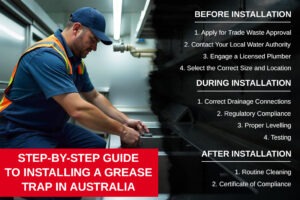
Installing a grease trap in Australia is a pretty regulated process, all designed to keep the environment and your local sewer network safe and healthy. It needs council approval, a licensed plumber and pretty strict adherence to both the Plumbing Code of Australia and your local water authority’s trade waste requirements.
Before Installation
1. Apply for Trade Waste Approval
First things first : get in touch with your local council (like the Federation Council or Greater Western Water) to get that Trade Waste Approval sorted. That means submitting your proposed plumbing layout and equipment details for review – just to make sure you’re staying within the law.
2. Contact Your Local Water Authority
You might also need to have a word with your local water authority (like Sydney Water or Water Corporation) to get their approval for the installation. They’ll want to have a look at your kitchen and figure out whether a grease trap is actually needed.
3. Get a Licensed Plumber Onboard
In Australia, only a licensed plumber can actually install a grease trap, so that’s who you’ll need to ring. They’ll do all the work according to your plans, making sure that the system meets all the national and local regulations. Once they’re done you should get a Certificate of Compliance from them to confirm it all meets the required standards.
4. Choose the Right Size and Location
Your plumber or designer will work out what size trap you need based on your kitchen’s FOG (fats, oils, and grease) output and how often you need to clean it. And of course, it’s all about finding a spot that’s easy to get to for regular servicing.
During the Installation Process
- Getting the Drainage Right: Your plumber will hook the inlet and outlet pipes up according to the right specs – making sure that the right bits are connected in the right way.
- Staying Regulated: You’ll need to stick to the rules – so that means following the manufacturer’s instructions and the Plumbing Code of Australia.
- Levelling it Out: The trap has to sit level – that’s pretty important for getting the best performance and efficiency out of it.
- Testing It Out: Once it’s all installed, you’ll need to test the system to make sure everything is working as it should.
After Installation
- Regular Cleaning is a Must: Keep your grease trap clear of blockages, bad smells and nasty problems from the council by keeping it regularly cleaned and pumpouted.
- Certificate of Compliance: Your plumber will give you a Certificate of Compliance – you may need to show this to your local council or water authority to get your approval finalised.
How Much Does Grease Trap Installation Cost?
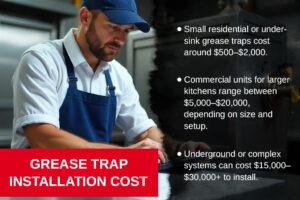
It’s reported that the cost of installing a grease trap can vary a great deal according to recent data from industry sources.
- Residential or under-sink units might cost anywhere from $500 to $2,000.
- Commercial units are a different story – especially if your business needs to handle large food service operations. Costs can be anywhere from $5,000 to $20,000 depending on size, the complexity of the installation and where it needs to be fitted.
- For big, complex systems installed underground, costs can really add up from $15,000 to $30,000 or more.
- Automated/Smart Grease Traps: Can add 20-40% to the baseline cost depending on features.
Key Factors Influencing Grease Trap Installation Costs
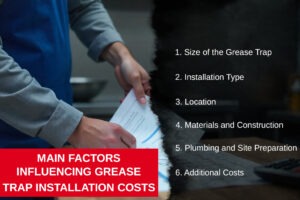
Several things play a role in how much a grease trap will actually cost to install:
The Size of Your Grease Trap
The size is one of those main factors that decides the overall cost – smaller traps are less expensive for residential or small business use, whereas larger ones required for large business kitchens or high-flow environments can be a lot more expensive.
Type of Installation
- Above ground installations are generally less costly because they only involve simple plumbing and minimal digging.
- Underground installations on the other hand are more expensive because they need excavation and special equipment. These need more time, labour and sometimes concrete work.
Location
- Accessibility plays a big role in the cost – if the installation site is hard to get to or needs extra work to get done (e.g. underground or inside a building), the installation price will go up.
- Local council requirements also have an affect on the cost. Some councils have specific requirements for systems or installations to meet environmental or health standards which can increase the upfront and ongoing costs.
The Materials Used and Construction
Grease traps come in different materials – plastic (HDPE), stainless steel and concrete. Plastic ones are generally the least expensive, while concrete models are more durable and suited for larger more complex installs but cost a lot more.
Existing Plumbing and Site Preparation
Some installs need significant changes to the existing plumbing. If your kitchen needs to have the plumbing rerouted or upgraded to accommodate the grease trap, this will add to the labour costs. For commercial installs, drainage systems may need to be modified or extended, which adds to the cost.
Extra Costs You Need to Consider
- Maintenance: Grease traps need regular cleaning and maintenance. Some traps, especially the bigger ones, may need professional cleaning done regularly which adds to the long term running costs.
- Smart or Automated Systems: Some high end traps come with automation features like smart skimming systems, which can increase the upfront cost but help reduce the maintenance costs over time.
How to Get an Accurate Quote?
To get the best deal for your installation, request quotes from multiple licensed plumbers. Be prepared to provide:
- The size of your business and estimated grease output.
- The location of the grease trap (above-ground vs. underground).
- Any plumbing modifications required.
Pro Tip: Always ask about local council requirements and if a trade waste approval is needed before installation, especially for commercial premises.
Top 10 Grease Trap Installation Companies in Australia
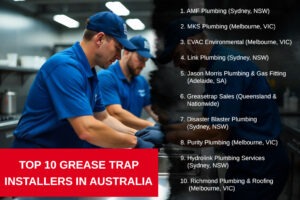
Installing a grease trap isn’t just a plumbing job — it’s a legal requirement for Australian food businesses. Choosing the right company ensures your system meets Trade Waste Approval, complies with the Plumbing Code of Australia, and avoids expensive blockages or fines.
Below are 10 top-rated Australian companies offering grease trap installation, servicing and trade-waste compliance support — along with their service areas, reviews and highlights.
1. AMF Plumbing (Sydney, NSW)
Google Rating: Highly trusted (multiple verified reviews)
Service Area: Greater Sydney region, including Parramatta, Inner West and North Shore
Why They’re One of the Best:
AMF Plumbing specialise in above-ground and below-ground grease trap installations for restaurants, cafes and food courts. They offer transparent quotes and compliance with Sydney Water Trade Waste requirements.
Notes & Highlights:
- Provides detailed quoting and approval assistance with Sydney Water.
- Focuses on correct sizing and installation standards for longevity.
- Says “installation is 60% of the job” — prioritises long term reliability
- Best For: Sydney based commercial kitchens needing quick, compliant installations.
2. MKS Plumbing (Melbourne, VIC)
Google Rating: 4.6 (18 reviews)
Service Area: Melbourne Metro, including Williamstown, Footscray, Port Melbourne and CBD
Why They’re One of the Best:
MKS Plumbing offer installation, repair and maintenance for above and below-ground grease traps. They manage trade waste plumbing from start to finish.
Notes & Highlights:
- Offers ongoing servicing and compliance checks for Yarra Valley Water approvals.
- Emphasises safety, compliance and preventative maintenance.* High volume hospitality.
- Best For: Melbourne cafes and restaurants needing one stop installation and service.
3. EVAC Environmental (Melbourne, VIC)
Google Rating: 4.0 (verified)
Service Area: Melbourne & Victoria
Why They’re One of the Best:
EVAC Environmental have over 25 years experience in grease trap sales, installations and repairs. They also supply grease removal devices (GRDs) and work directly with Victorian water authorities for compliance.
Notes & Highlights:
- End to end service: design, supply, installation and maintenance.
- Works with major commercial kitchens and hotels.
- Environmental compliance and reliability.
- Best For: Victorian businesses needing full compliance and maintenance support
4. Link Plumbing (Sydney, NSW)
Google Rating: 5/5 (Highly rated by locals)
Service Area: Sydney Metro – that covers over 70 suburbs, including the CBD, Bankstown and Hills District area
Why They’re One of the Best:
Link Plumbing is a top pick for expert grease trap installation & maintenance for commercial kitchens of all sizes. Their focus is on getting the job done promptly & reliably
Notes & Highlights:
- We’ve got a string of 5-star reviews on multiple platforms
- Known for friendly service, prompt installations and being pretty obliging when emergencies strike
- They also handle emergency repairs and upgrades – no problem
- Best For: Sydney restaurants & cafes that need reliable after-sales support
5. Jason Morris Plumbing & Gas Fitting (Adelaide, SA)
Google Rating: 5.0 out of 5 (33 reviews on Hipages)
Service Area: South Adelaide, Glenelg, Marion and surrounding suburbs
Why They’re One Of The Best:
Jason Morris Plumbing & Gas Fitting has been a family-owned business in South Australia for over 20 years. They provide top-notch grease trap installation & plumbing services for commercial kitchens.
Notes & Highlights:
- Highly rated for punctuality, being totally upfront & honest and doing quality work that lasts
- They’re clued up on SA’s trade waste laws and environmental compliance – you can count on them to get it right
- Personalised service with a strong local reputation – you’ll be treated like a valued customer
- Best For: Adelaide cafes, takeaways and bakeries that need reliable local plumbing experts who get the job done
6. Greasetrap Sales (QLD & Nationwide)
Google Rating: Not publicly listed (we’ll have to look elsewhere for a rating)
Service Area: Queensland HQ with services available all over Australia
Why They’re One Of The Best:
Greasetrap Sales is all about designing and installing trade waste equipment – and they do it Australia-wide. They work with some of the biggest franchises and hospitality chains
Notes & Highlights:
- Expertise in hydraulic design and pre-treatment systems that really work
- They’ll take care of all the compliance documentation & approvals for you
- Perfect for large-scale or multi-site operators that need hassle-free solutions
- Best For: Large brands or franchises that need help upgrading their kitchen systems
7. Disaster Blaster Plumbing (Sydney, NSW)
Google Rating: 4.7/5 (a great rating from 56 reviews)
Service Area: Greater Sydney region, including Western Sydney and the Inner West
Why They’re One Of The Best:
Disaster Blaster Plumbing is all about both emergency plumbing AND trade waste plumbing. They’ll get your grease trap installed quickly & compliantly for restaurants and cafes.
Notes & Highlights:
- They’re on call 24/7 for emergencies and need to get your kitchen up & running ASAP
- Experienced with all major grease trap models – they know what they’re doing
- Totally transparent pricing and fast response times – you’ll get the job done fast
- Best For: Sydney businesses that need urgent installation or repairs done pronto
8. Purity Plumbing (Melbourne, VIC)
Google Rating: (highly rated, but we can’t see the exact number of stars)
Service Area: Greater Melbourne, including Dandenong, Clayton and Richmond suburbs
Why They’re One Of The Best:
Purity Plumbing is an eco-friendly plumbing business that provides grease trap installations, routine cleaning & waste management for commercial kitchens.
Notes & Highlights:
- They’re all about sustainable waste practices – so you can do your part for the environment too
- Offers installation & maintenance contracts that’ll keep your kitchen running smoothly
- Known for neat, compliant installations and long-term support – you can count on them
- Best For: Eco-conscious Melbourne businesses that care about sustainability
9. Hydrolink Plumbing Services (Sydney, NSW)
Google Rating: 4.9/5 (from 471 reviews – that’s a lot of happy customers!)
Service Area: Sydney and surrounding suburbs including Campbelltown, Liverpool and Parramatta
Why They’re One Of The Best:
Hydrolink is one of Sydney’s top-rated plumbing companies – they have a nearly flawless track record. They offer compliant grease trap installations and trade waste plumbing.
Notes & Highlights:
- They’ve got an incredible 4.9-star average from hundreds of verified customers
- Expertise in commercial plumbing and wastewater treatment – they really know their stuff
- Strong focus on OH&S and Sydney Water approvals – you can trust them to get it right
- Best For: Large kitchens or food chains that need trusted Sydney specialists to get the job done
10. Richmond Plumbing & Roofing (Melbourne, VIC)
Google Rating: 4.5 out of 5 stars (verified)
Service Area: Melbourne Metro, Richmond, Abbotsford, South Yarra – and surrounding suburbs
Why They Stand Out:
Richmond Plumbing has got trade waste systems covered – from design right through to getting everything approved and installed. They offer top-notch, long-lasting solutions that meet code regulations for the medium to large food-service operations in the area.
Notes & Highlights:
- Have a track record of getting clients sorted with Yarra Valley Water compliance.
- Look after all the paperwork and council submissions for you.
- Specialise in large-scale commercial plumbing and always deliver.
- Best For: Melbourne restaurants and commercial kitchens that need expert long-term support to stay on the right side of the local water authorities.
Maintaining a Grease Trap in Australia: Doing it Right
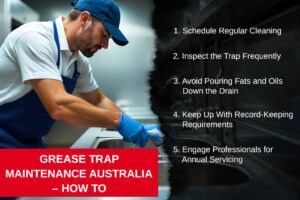
Once you’ve got a grease trap installed, you need to keep it in good nick to stay compliant and keep your plumbing system running smoothly. Neglecting maintenance can lead to some pretty unpleasant odours, blockages, and even penalties from your local water authority. But with the right approach, you’ll be good to go and meet your Trade Waste Agreement requirements.
1. Schedule Regular Grease Trap Cleaning
This is probably the most important part of maintenance – your local councils and water authorities (think Sydney Water, Yarra Valley Water, and Water Corporation WA) will expect you to clean your grease trap every 1 to 3 months, depending on how big it is and how much FOG your kitchen produces.
- Make sure to hire a properly licensed waste contractor or grease trap cleaner.
- Cleaning involves hauling out the accumulated grease, solids and wastewater.
- Don’t even think about trying to do it yourself – waste needs to be disposed of at a proper facility.
2. Inspect the Trap Frequently
If you keep an eye on things, you’ll be able to spot problems before they become major issues. Take a good look at your trap:
- Is it getting thick with grease or food solids on the surface?\
- Is the water draining slowly or is there a funny smell coming from it?\
- Are there any signs of leaks or corrosion?
If it’s more than a quarter full of grease, it’s probably time to call in the professionals for a clean.
3. Avoid Pouring Fats and Oils Down the Drain
Prevention is the best strategy when it comes to maintenance. Encourage your staff to:
- Wipe down pans and dishes before washing them.
- Collect used oil in containers for recycling.
- Use sink strainers to catch any solids that come down the drain.
Even a small amount of oil will build up over time and reduce the effectiveness of your trap.
4. Keep Your Records in Order
Local councils might ask for proof that you’ve been keeping on top of maintenance. Keep handy:
- Pump-out receipts from your waste contractor.
- Inspection and cleaning logs.
- Trade Waste Agreement documents and your Stickers of Compliance (Sorry, we mean Certificate of Compliance).
Staying on top of your paperwork will save you from compliance headaches and make audits a whole lot smoother.
5. Engage Professionals for Annual Servicing
Once a year, have a fully-fledged plumber or waste contractor give your system a thorough going over. They’ll check:
- All the inlet and outlet connections.
- Baffles and seals.
- Venting and drainage flow.
- Structural integrity of the tank.
This will ensure your grease trap is meeting the Australian Plumbing Code and local water authority standards.
Cleaning Frequency
- Busy restaurants and cafes: every 4-6 weeks.
- Moderate-use kitchens: every 8-12 weeks.
- Low-volume operations (like small cafes or bakeries): every 3 months (max).
Tip: If more than 25% of the trap’s volume is filled with grease or solids, it’s due for cleaning regardless of the time period.
Replacement Schedule
Grease traps are built to last, but over time corrosion or structural wear can occur.
- A well-maintained polyethylene or stainless steel trap can last 10-15 years.
- Concrete traps may last longer but require occasional internal coating maintenance.
- Replace the trap if you notice cracks, leaks, rust or reduced flow performance.
Compliance Reminder
Under your Trade Waste Agreement you are required to keep records of each pump-out or maintenance service. Not cleaning your trap regularly can result in:
- Blocked drains and plumbing issues.
- Bad odours or pest problems.
- Fines or suspension of trade waste approval.
- Clean every 1-3 months, depending on usage.
- Replace every 10-15 years, or sooner if damaged.
- Always keep service records to stay compliant.
In summary:
- Clean every 1-3 months, depending on usage.
- Replace every 10-15 years, or sooner if damaged.
- Always keep service records to stay compliant.
Why Proper Grease Trap Installation is Important in Australia?
Installing a grease trap correctly isn’t just about ticking off council requirements — it’s a vital step in protecting your business, your plumbing and the environment. In Australia, food businesses are required to manage fats, oils and grease (FOG) responsibly to prevent contamination of public sewer systems.
1. Avoid Costly Plumbing Issues
Poorly installed or undersized grease traps can cause blockages, slow drainage and pipe corrosion. When FOG solidifies in pipes it restricts water flow and may result in expensive emergency plumbing repairs. Proper installation ensures your drainage system runs smoothly and minimises downtime — especially important for busy restaurants and cafes.
2. Stay Compliant with Local Regulations
Every council and water authority has strict Trade Waste Regulations. Correct installation by a licensed plumber ensures your setup meets the Plumbing Code of Australia and your Trade Waste Agreement. Non-compliance can result in fines, disconnection from the sewer network or suspension of your trade waste approval.
3. Protect the Environment
Grease traps stop harmful fats and oils from entering Australia’s waterways. When FOG escapes untreated it can damage ecosystems and create fatbergs — massive blockages in sewer systems. A properly installed and maintained trap reduces your business’s environmental impact and supports local sustainability goals.
4. Stop Odours and Health Hazards
Incorrect installation often leads to leaks, poor ventilation and bad smells around your kitchen area. Proper positioning and sealing of the trap stops odour problems and ensures a clean, safe and hygienic work environment for staff and customers.
5. Save in the Long Run
While professional installation has upfront costs, it prevents costly plumbing emergencies, reduces cleaning frequency and extends the life of your system. In the long run these savings far outweigh the initial cost.
Common Mistakes to Avoid During Grease Trap Installation in Australia
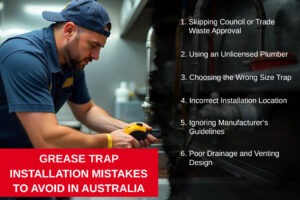
Even the smallest installation errors down the line can cause major headaches – plumbing failures, trade waste breaches and all sorts of other problems that eat into your profits and damage your investment. To avoid all this stress and stay compliant, here are the most common mistakes that Australian businesses need to watch out for when installing a grease trap – mistakes that can be easily avoided with a bit of know-how.
1. Not Getting the Right Approval from Council
One of the biggest mistakes is installing a grease trap before getting the nod from your local council. You need to get Trade Waste Approval from your water authority – whether that’s Sydney Water, Greater Western Water, or Water Corporation WA. If you don’t get that approval upfront, you’re asking for trouble. Without it, your business could be staring down a world of problems including:
- Re-inspection fees – or in the worst case, having to rip the whole system out.
- Delays in opening for business – because your kitchen is temporarily out of action.
- Fines or even suspension of your trade waste discharge rights – because the authorities think you’re not playing ball.
Get your installation plans looked over before you start any plumbing work, just to be on the safe side.
2. Hiring an Unlicensed Handyman
In Australia, installing a grease trap is a job for a properly qualified plumber. Don’t try to bring in a mate or a DIY expert who might not have a clue what they’re doing. If you do, you could be facing:
- Leaks or pipes that aren’t pitched correctly – which can lead to a whole lot of other problems.
- Invalid warranties and insurance payouts – because you didn’t do it right.
- No Certificate of Compliance – which can get you in hot water when the council come knocking.
By hiring a real pro, you know the work will be done to code, and you’ll get all the supporting paperwork to prove it.
3. Getting the Wrong Size Trap
If your grease trap is too small, it’ll quickly become a maintenance nightmare – with frequent blockages and costly clean-ups. On the other hand, if it’s too big, you’ll be stuck with stagnant water and bad smells.
A proper plumber will size the thing correctly, taking into account things like:
- How many sinks and dishwashers you’ve got.
- The volume of food you’re churning out.
- How much FOG (that’s Fat, Oil and Grease) you’re likely to generate each day.
That way, the thing runs smoothly, and maintenance is a doddle.
4. Installing the Trap in the Wrong Place
Placement is everything when it comes to a grease trap. You need to get it right if you want it to do its job properly. Some common mistakes include:
- Putting it too far away from the kitchen, which means you’re stuck with long, grease-filled pipes.
- Installing it in a cramped spot where the pump-out people can’t get at it.
- Placing it near the ventilation system – which just leads to bad smells drifting out into the street.
The trap should be easily accessible, on a level surface, and away from all the food-handling action.
5. Ignoring the Manufacturer’s Instructions
Every grease trap has its own specific installation and maintenance requirements – and if you ignore them, you’re asking for trouble. Don’t forget to follow:
- The manufacturer’s installation diagrams – because they know their own product better than anyone.
- The recommended pipe heights and connections.
- The maintenance and cleaning schedules – or you might find that the warranty is voided.
6. Stuffing Up the Drainage and Venting
If you don’t get the pipes and vents right, you’re in for a world of pain – with backflow and stinky odours galore. Make sure to get the outlet set lower than the inlet, and install vents to let the gases escape safely.
Conclusion
Installing a grease trap is one of the smartest moves you can make for your food business – it’s a no-brainer. But just because it’s a good idea, doesn’t mean it’s not going to cost you – the installation bill can range from a few hundred dollars for a small unit to over $30,000 for a big commercial system.
By getting the right system, with the right sizing and the right installation, you can save yourself a fortune in the long run – and avoid all the headaches that come with a dodgy grease trap.
Before you commit, take a step back and compare quotes, verify council requirements and then pick materials that walk the line between durable and affordable. With a solid installation partner and a realistic grip on costs, your grease trap will be looking out for your business, the planet – and your bottom line – for years to come.
FAQ – Grease Trap Installation Costs
1. Do I Need Council Approval Before Installing a Grease Trap in Australia?
Yes. Every commercial kitchen or eatery in Australia needs to get the greenlight from their local council or water authority before installing a grease trap – they call this Trade Waste Approval. This approval ensures your install meets the environmental and plumbing standards as outlined in the Plumbing Code of Australia. Without it, you could be facing fines, costly rework and delays to getting your business up and running.
2. How Often Should I Clean My Grease Trap?
Most Aussie councils say grease traps need to be cleaned every 1 to 3 months, depending on how much grub you’re serving. Busy restaurants might need a clean every 4 to 6 weeks, while smaller cafes might get away with cleaning it every quarter. Regular cleaning stops blockages, odours and those pesky non-compliance penalties. Make sure you get a licensed waste contractor to do the job right.
3. Can I Install a Grease Trap Myself, or Do I Need a Plumber?
In Australia, grease traps have to be installed by a registered plumber to make sure you’re complying with state law and your Trade Waste Agreement. DIY installs aren’t allowed – a professional plumber will make sure the sizing, location, drainage and venting are all spot on, and they’ll give you a Certificate of Compliance to prove it.
4. What Happens if I Don’t Maintain or Clean My Grease Trap?
Neglecting your grease trap can lead to a whole heap of problems – clogged pipes, stinky smells, sewer overflows and costly repairs. You could also be looking at environmental pollution and fines from your water authority. Regular maintenance keeps your business on the right side of the law, prevents downtime and helps avoid the nasty consequences of poor waste management.
5. Are There Any Government Grants or Rebates for Grease Trap Installation?
As it stands, there are no national grants specifically for grease trap installs. However, some state and local councils do offer environmental or sustainability grants that might include plumbing or trade waste system upgrades. The best thing to do is get in touch with your local council or check out business.gov.au and GrantConnect to see if there’s any funding available in your area.