






Over the past decade Australia has seen a massive shift in how people earn, driven by digital disruption. Even after the peak of pandemic era remote work the habit has stuck: 35-40% of Australian workers are working partially or fully from home — way higher than pre-COVID levels.
In 2025 the Australian Bureau of Statistics says the formal unemployment rate is ~4.1% and underemployment is at 5.7%. These numbers hide a deeper change: technology, AI and global connectivity are creating income models that don’t rely on traditional full time roles.
Looking ahead the next decade (2025-2035) will see online income modes evolve from “supplement” to “primary income” for many. Already AI adoption is accelerating: 84% of Australians in office jobs are using AI at work as of 2025.
Governments and enterprise estimate AI will add $115 billion to the Australian economy through productivity gains.
This is just the beginning. Over the next decade we’ll see tokenised assets, virtual economies, Web3 monetisation and AI enhanced freelance models. Those who start building online income streams now will be ahead of the curve in 2030 and beyond.
Online Income Evolution – From Side Hustles to Mainstream Careers

A decade ago making money online in Australia was mostly side hustles: selling handmade crafts on Etsy, tutoring after hours or blogging for ad revenue. But the lines have blurred.
Platforms like ServiceTasker are expanding gig marketplaces in Australia, connecting local service providers to clients via digital interfaces.
At the same time tech companies and corporates are adopting hybrid and remote work norms. According to one 2025 survey 53% of Australian employees work remotely at least part time and 69% of employers offer hybrid work models.
In 2025 more than 80% of HR/employee survey respondents expect hybrid arrangements to stay the same or grow.
These stats prove a simple truth: online income is no longer niche — it’s mainstream. Many full time workers are already supplementing their income with consulting, content, side e-commerce or digital gigs. The line between “job” and “entrepreneurship” is blurring.
AI, Blockchain and Automation in New Income Models
The emerging technologies are the engines:
- AI agents & co-pilots will handle low-to-mid complexity tasks. Professionals who can supervise, audit and refine AI output will be in demand.
- Blockchain and tokenisation allows digital ownership of assets — music, art, intellectual property — and creation of markets for fractional rights.
- Smart contracts enables trustless monetisation: e.g. pay-per-use APIs, subscription triggers, royalty splits, automated micropayments.
- Automation of workflows with tools like Zapier, Make or AI pipelines means you can manage vast systems with minimal “hands on” effort.
In Australia 40 % of small-to-medium enterprises (SMEs) currently adopt AI in some form — up from previous quarters. And data shows that among Australian office workers 84% are using AI at work.
How to Make Money Online? 10 Best Ways
1. AI-Powered Freelancing & Consulting

AI has gone from being just a tool – to being a trusted collaborator.
- Freelancing with AI: Pair writing, coding or design skills with AI generated drafts and you’ve got a finished piece ready to be polished. Australian copywriters can rake in $150 per article by combining ChatGPT with edits tailored to their client’s brand.
- AI Consulting: Businesses are looking for help to seamlessly integrate AI in their workflow. You could be offering workshops or audits to small and medium sized businesses in Sydney or Melbourne for $200-$500 per session.
By 2030 freelancers who learn to use AI would likely be handling 3-or-4 times more work without getting burned out, and as a result they could be earning multiple income streams.
2. Building Immersive Digital Courses & Learning Hubs
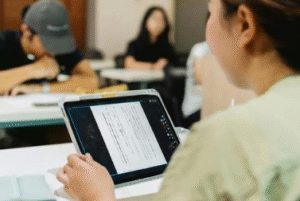
Learning is an ongoing part of life in Australia.
- Online courses: You could sell video courses on platforms like Teachable or Udemy. For example, you could offer a course on “AI tools for Small Aussie Businesses”, priced at AU$79
- Micro learning packs: Bite-sized skills courses like how to “do prompt engineering for real estate agents”. Charge AU$10-$20 per mini pack.
- Virtual reality/ augmented reality training sessions: Why not host virtual training sessions in the metaverse? An architecture tutor for example might run VR design walk-throughs for AU$200 a student.
The Australian e-learning market is forecast to reach a whopping AUD18B+ by 2033 – That’s a gold mine waiting to be tapped for digital educators.
3. Content creation 3.0 – beyond YouTube & TikTok

We’ve moved beyond just raking in likes & ad revenue.
- AI assisted video creation: Use AI to script, edit and subtitle your videos and add your own personal touch by putting your face and voice in. You can monetise this content through ads and sponsorships.
- Get your message out on multiple platforms: Why just stick to YouTube, post your content on VR spaces, web3 socials, and TikTok, to name a few. Each of these channels are another potential income stream.
- Community NFTs & monthly membership models: Sell NFT passes that unlock special content or create a paid community ( like a $15 a month fan club).
By 2030, the balance of power will likely have shifted, with creators earning just as much from fan driven revenue models as from advertising.
4. Digital Asset Trading & Tokenisation

Assets no longer need to be tied up with banks and financial institutions.
- Tokenised real estate investing: For example you could buy fractional shares in apartments or commercial units in Sydney or Brisbane and earn dividends from rent.
- Buying song or art rights: You can own part of a song or artwork via blockchain – that means you get paid every time it streams or sells.
- Trading for profit: Just like shares, you can buy and sell tokens as their value rises.
For example, an Aussie investor could put $500 into a tokenised rental property and receive small monthly payouts without having to lift a finger.
5. E-commerce with AI & Dropshipping 2.0
Retail is set to become even more intelligent.
- AI product research: Tools that predict which products will be hot before they even start trending. An example would be spotting eco-friendly camping gear for Aussies before summer hits.
- Print-on-demand: Sell custom T-shirts, mugs or posters without ever having to hold any stock. The profit comes from the markup on each sale.
- 3D printing custom parts: Offer customised car parts or home DIY projects. The margins can be higher due to the uniqueness of the items.
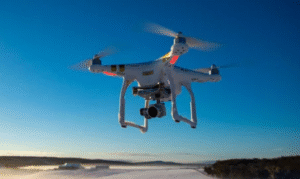
- Drone delivery: As Aussie cities start to use drones, delivery costs shrink and you can compete on speed.
A small e-store using AI + print-on-demand could hit $5,000 to $10,000 in sales a month with minimal risk of holding inventory.
6. Virtual Services in the Metaverse

The Metaverse is creating all sorts of brand-new job markets that are off the charts.
- VR coaching: Run yoga, fitness, or therapy classes in virtual reality – clients pay per session, anywhere between AU$20 to AU$50 is fair.
- Virtual shops: Set up a digital storefront and sell Aussie art or digital products – charge for items and experiences, and see the money roll in.
- Rent virtual land: Buy a plot in a popular VR world and let someone else use it for events – and get paid.
Imagine an Aussie career coach running virtual interview prep sessions for students all around the world, and getting $150 per session – sounds like a pretty nice little earner.
7. Investing in Future-Proof Markets

Smart investors are already onto sustainability and AI.
- Green tech: Throw your money at solar, wind or EV projects. Loads of Aussie funds are already onto ESG investing, and it’s only going to get more popular.
- AI trading bots: Use one of these automated bots to trade crypto or stocks and just sit back and watch the profits roll in – even a small investment of $500 can start to grow steadily with the precision of an algorithm.
- Robo-advisors: Let a platform manage your portfolio and just chill – they can get you a 6-8% annual return which is not bad at all.
By 2030, 1 in 4 Aussie investors is expected to be using AI-assisted trading – so you’re not going to want to miss out on that.
8. Online Health, Fitness & Wellbeing Ecosystem

The health sector is moving online fast, and don’t you know it.
- AI fitness apps: Develop an app that creates personalised workout plans for users – you can charge a monthly subscription fee of anywhere between AU$15 to AU$30.
- Telehealth sessions: Run psychology, nutrition or wellness coaching sessions over video – and get paid per session.
- VR therapy: Create guided meditation or stress relief experiences in virtual reality and sell access to them – sounds like a pretty good gig.
Example: an Aussie nutritionist could earn an extra AU$2k a month running online diet programs for people all around the world – not bad at all.
9. Global Language & Knowledge Economy
Knowledge is just about the most valuable currency there is – and people are willing to pay for it.
- AI-powered tutoring: Use AI to translate for you and teach English to students all around the world – get paid per lesson.
- Micro-advice calls: Offer 15-30 minute consultations on things like Aussie property investing, and charge a fee of AU$50 to AU$100 per call.
- Digital templates: Sell ready-made business documents or study guides and earn money with each download.
Example: platforms like Preply and Clarity.fm make it easy for Australians to reach a global audience and start earning real money.
10. Building Your Own Digital Brand Empire
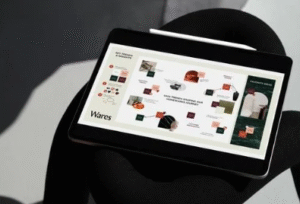
Building a personal brand is a great way to create a long-term income stream – and it’s doable.
- Ads & affiliates: Earn money via YouTube ads or by promoting products as an affiliate – a finance blogger could earn $2k a month in commissions.
- Memberships: Offer exclusive content to people who pay a monthly membership fee of $10 to $20.
- Merchandise & products: Sell eBooks, digital tools or branded merchandise – and watch the money pile up.
- AI reputation management: Automate responses, analytics and outreach to scale your audience growth – sounds like a no-brainer.
In Australia, influencers with just 10k followers can earn $500 to $1,000 per sponsored post – which isn’t too shabby.
Strategies to Maximise Future Online Income
Combining Multiple Streams: Hybrid Approach
Try stacking 2-3 income lines: for example, do AI copywriting on a retainer, sell micro courses and have affiliate links – that way if one dips, the others can cover.
Why now? Well, it seems like almost 949k Australians (6.4% of workers) are already working more than one job – that’s a side-income mindset that’s gone mainstream.
Mix active & semi-passive: Pair billable services (freelance/consulting) with scalable assets (templates, digital products, tokenised royalties) – don’t be afraid to mix things up.
Example: a Melbourne marketer is running an AI-content retainer worth $1,200 a month, selling Canva templates for AU$49 and earning affiliate revenue from tools – nice work.
Go channel-agnostic: if you put all your eggs in one basket (like a store or social media following) and it gets hit by an algorithm change, your email list and community are still yours – and that’s something to hold onto.
Momentum: Australia added ~10% more online businesses since 2019; small e-comms topped 87k in 2024. Diversify where you sell.
Lean into AI to lift capacity: SMEs adopting AI jumped to 40% in Q4 2024–Q1 2025; even micro-firms (≤4 staff) rose from 25% → 34%. Use that edge to handle more clients without burning out.
Automating repetitive workflows with AI/No-Code tools
- Automate the boring bits: proposals, invoicing, briefs, first-drafts, clip repurposing. Use AI + no-code (Power Apps, Make, Zapier) to reclaim 5–10 hours/week.
- Build micro-systems:
- Auto-draft article → you edit → auto-publish to CMS → auto-clip to socials.
- Inbox triage bot → routes leads → books Calendly → raises an invoice.
- Adopt low/no-code at speed: Australia’s low-code market is set to jump from US $773m (2023) to US $4.2b by 2030 (≈27.4% CAGR).
- Translation: cheaper, faster app-building for solo operators and SMEs.
- Close the capability gap: Roughly only 39% of Australian SMEs generate meaningful online revenue (vs 67% APAC). Automations can help bridge skills and capacity gaps fast.
Cybersecurity, Compliance, and Trust in Online Work

- Price in cyber risk: The average cost per cybercrime report to Australian businesses hit $80,850 (small business $56,600). Even one breach can wipe out a year’s side-income — harden basics (MFA, passkeys, backups, patching).
- Ditch legacy tech: The ACSC is urging businesses to replace outdated systems as threats surge. Modern stacks lower exploit risk and insurance headaches.
- Prep for Privacy Act changes: Government has flagged major privacy reforms, including reconsidering the small-business exemption (potentially pulling ~2.3m small firms into scope). If you handle customer data, get consent flows, DPAs, and retention policies in order now.
- Make trust a revenue feature * Add a security page (what you collect, where it lives, how to delete).
- Offer AU-hosted storage and clearly labelled cookies.
- Display compliance badges (PCI-DSS for payments, ISO/ESS where applicable).
Conclusion: Final Thoughts
The question “how can we make money online” is no longer just about quick gigs or side hustles. For Australians in 2025 and beyond, it’s about building future-ready careers that can adapt as technology reshapes the way we work.
Over the next decade, digital income will be defined by three core truths:
- Adaptability beats certainty – jobs and platforms will change, but those who experiment, pivot, and upskill will thrive.
- Hybrid income is resilience – combining freelancing, digital products, tokenised assets, and community-driven ventures creates stability.
- Trust is the new currency – clients and audiences will choose creators, consultants, and businesses who are transparent, secure, and ethical in their AI use.
The road ahead is disruptive, yes — but also filled with possibility. By leaning into AI, Web4, decentralised networks, and human creativity, you can turn online income into not just extra dollars, but a sustainable, scalable career for 2030 and beyond.